
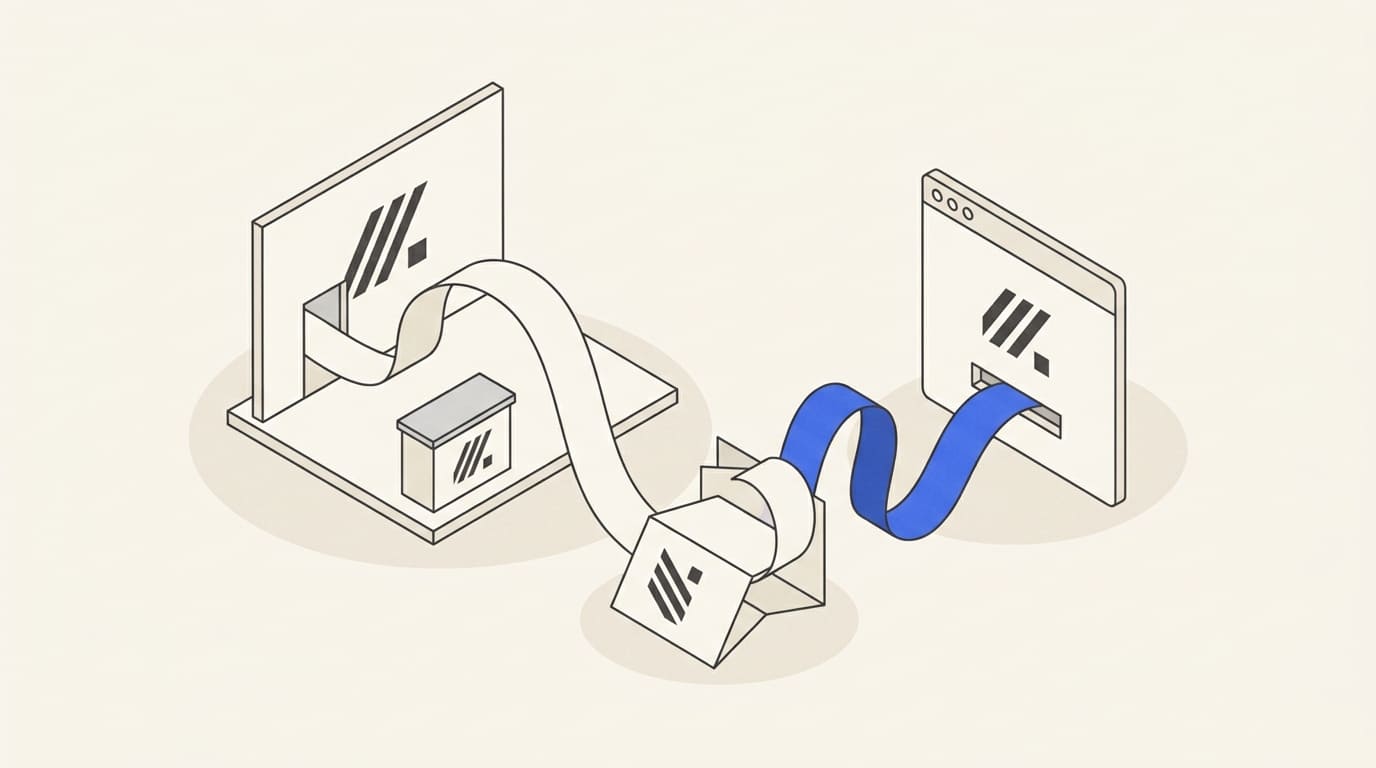
A visitor notices your stand, speaks with an employee and takes a catalogue. Later, they scan the QR code and arrive on a general website page where the offer they discussed is hard to find. The visual identity may be consistent, but the journey after the meeting remains unfinished.
Build your trade show materials around a specific visitor task. The stand draws attention to the offer, the takeaway material helps them retain it, and the web page lets them continue with the right action after the conversation.
Define the audience and outcome of the meeting
Clarify whom the team wants to meet: buyers, dealers, partners or specialists involved in the decision. Different roles may need different materials.
Choose the next step: a quote request, a demonstration, a partnership discussion or technical information. If there are several goals, separate the paths and assign owners.
Before design begins, prepare the offer wording, evidence of expertise, contacts and limitations. The advertising creative brief explains a useful set of inputs.
Assign content to each medium
At the stand, visitors should quickly understand who the company is, what task it helps with and where to approach. Move detailed explanations into material they can read after the conversation.
Give each medium a role:
- a sign or large panel: recognition and the main offer;
- the stand's working area: demonstrations and conversations;
- a short handout: the task, approach and next step;
- a catalogue or technical sheet: details for comparison;
- a business card or contact card: access to a specific employee;
- a web page: the current offer and a way to continue the enquiry.
You do not need to produce everything on the list. Choose a set based on the meeting, deadlines and budget. Do not simply shrink the same text to fit every format: the hierarchy and reading distance differ.
Prepare a dedicated destination page
The linked page should match what is discussed at the stand: language, product, terms, contacts and the next step. The information should also make sense to someone who did not attend the show but received the material from a colleague.
Explain whom the offer suits, what information is needed for an enquiry and who will continue the conversation. Check the form, confirmation, enquiry delivery and access to the page on a phone.
If the link opens a download, check that the file is current and convenient to use on mobile. The material should support the next action and include a contact or a clear way to make an enquiry.
Agree what will happen to the page after the event: the offer may remain, the content may be updated or the destination may change. A printed QR code cannot be corrected by replacing an image on the website.
Agree production requirements and check QR codes
Ask the organiser and manufacturer for dimensions, permitted structures, materials, deadlines and file delivery requirements. Graphic design, stand construction, installation and venue requirements are separate responsibilities.
Check layouts under their intended conditions: reading distance, lighting, actual size and placement at the stand. The print artwork preparation checklist covers production details.
Test the QR code on a finished sample using several ordinary phones. It must lead to the right address; a clear, short alternative path is useful for visitors who cannot scan it.
You can use separate tagged links to track different materials. However, a scan is not an enquiry, and an enquiry does not necessarily mean a new sale. The article on offline contacts and referrals in CRM explains how to preserve the mixed customer journey.
Organise the team's work after the meeting
Employees need consistent information about the offer's terms and the response they promise. Record the conversation topic, product of interest, language, agreement and next step.
Keep this context alongside contact details rather than relying on a list of business cards. Record the customer's explicit request and the permitted follow-up process separately. Assign an owner to each enquiry, especially when it goes to another department or a partner.
After the show, compare enquiries, continued discussions and completed deals, taking the buying cycle into account. Include preparation, production, participation and team time in the costs. The number of catalogues handed out does not by itself show a commercial outcome.
Checklist for a consistent trade show set
- The audience and next step after the meeting are defined.
- Each medium has a clear role and content.
- The offer, language and contacts are consistent across materials.
- The destination page matches the visitor journey and works on a phone.
- Production requirements and deadlines are confirmed.
- QR codes and links have been checked on finished samples.
- The team has rules for recording and handing over enquiries.
- Owners are assigned for post-event page updates and evaluation.
You can discuss graphic materials and adaptations through the commercial proposal for advertising layouts. Provide the audience, offer, list of media and manufacturer's requirements; stand construction, printing, participation and technical website changes are agreed separately.