
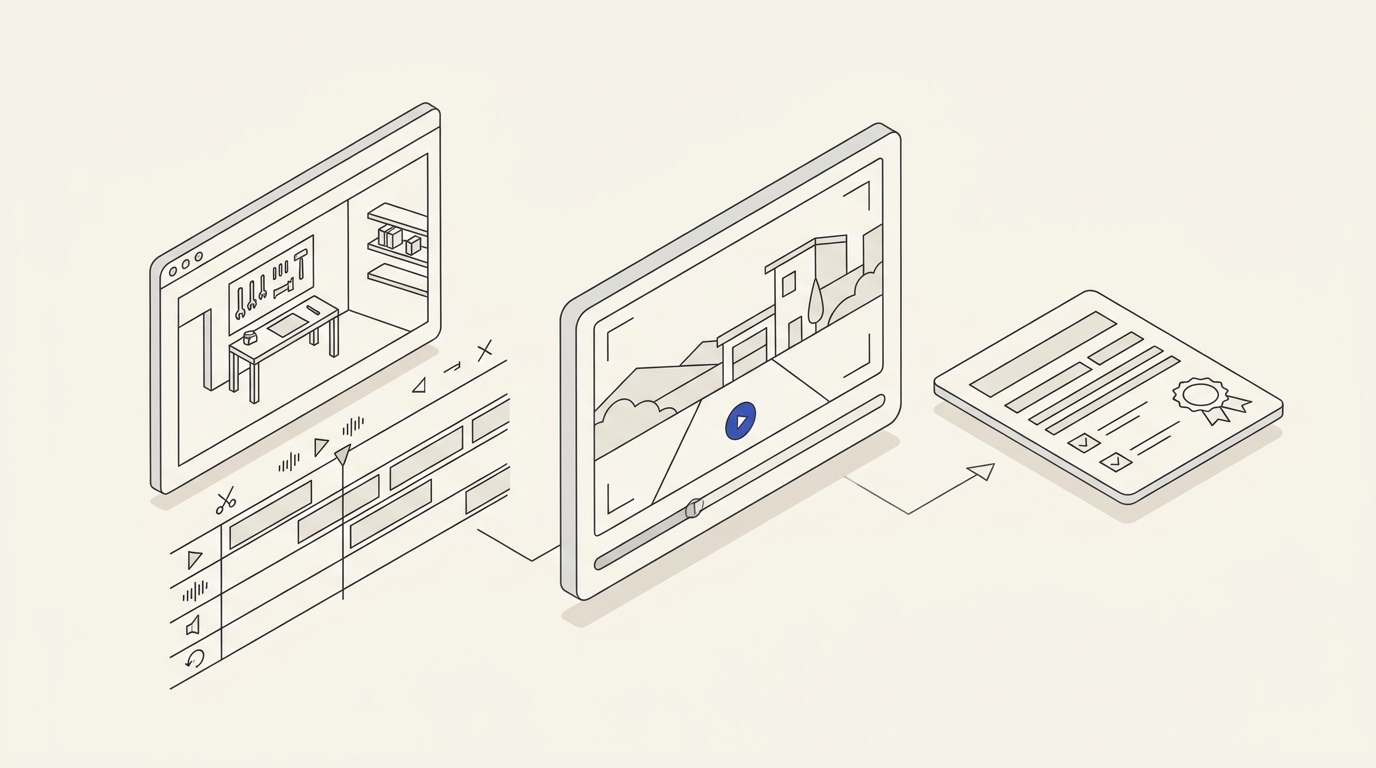
A technician installs a sensor, a developer types code and a designer moves elements around a screen. Viewers see activity but not which business problem the customer is paying to solve. Commercial video must connect the process to a result genuinely included in the service—not invent guaranteed revenue growth when the supplier only controls one implementation phase.
Confirm the promised result before choosing footage
Review the actual proposal and list deliverables: configured interface, report, documented procedure, accepted integration or training. Decide which can be shown without disclosing secrets. For intangible services such as an audit or consultation, show the structure of findings rather than fictional performance statistics. Use an approved storyboard to connect each planned shot to a deliverable, and define the constraints for filming any equipment, people or work in progress.
Connect frame, evidence and next action
One scene shows the original customer problem, the second a meaningful operation and the third verifies its outcome. The video need not include every editing step, but the main action should explain the deliverable. Reels script and production can shape the rhythm, while marketing strategy helps identify the audience and central message.
Claims that must not be inferred
A working screen does not prove the system will never fail. A report does not guarantee profit; an installed script does not prove compliance with every industry standard. For measurable claims, require baseline, method, observation period and permission to share. Otherwise use concrete, verifiable descriptions.
Hypothetical TASK-097: from montage to evidence
A fictional contractor implements a digital request registration system. The original video contains 15 seconds of equipment and laptop footage with no final verification. A revised version shows a synthetic enquiry, its arrival in a sample operator interface and a test-acceptance record. It contains no real customer logos or personal data.
- Open with the initial problem: requests are lost between channels.
- Retain only two process scenes explaining the event handoff.
- Show a test record visible to the assigned manager.
- Show acceptance evidence for a synthetic send-and-receive operation without claiming permanent reliability.
- End with the actual service or an individual quote request.
Positive: viewers distinguish installation, testing and commercial output. Negative: only assembly remains, or subtitles promise 100% conversion.
What to supply for production
Provide the approved service description, paid deliverables, available shooting objects, rights and CTA. Acceptance includes storyboard, shot list, edit versions, subtitles, exports and a check against the commercial offer. Through contacts, request a quote for one film or a series without fabricated KPI guarantees.
Separate video production and offer validation
The published Reels offer describes production cycles and packages, not guaranteed sales or a fixed price for every technical B2B film. Supply the contract's exact deliverables, demonstration files and approved screen/voice claims. A technical film may need additional planning and approvals.
Evidence map for a form-audit service
Fictional service Q-97 audits registration forms. Typing, meetings and browsing do not prove value. The three actual products are an issue map, reproducible test scenarios and a prioritised correction list. Match each to a visible element and a truthful phrase.
- Issue map: synthetic defects grouped by importance. Say “we check possible causes of missing enquiries”, not “we recover every sale”.
- Test scenarios: two synthetic form submissions, showing the source fields and expected receipt.
- Correction plan: anonymised tasks with owners and acceptance criteria; do not present completed implementation when only an audit was contracted.
Filled TASK-097 storyboard
00:00–00:04: source of enquiry is unclear. 00:04–00:09: show synthetic records and testing steps. 00:09–00:15: an expert marks discrepancies in a demonstration report. 00:15–00:20: the three deliverables appear with an invitation to discuss an audit. This 20-second timing belongs to the fictional example and is not a universal Reels requirement.
Positive test: a participant unfamiliar with the service names at least two concrete deliverables after watching. Negative test: all they remember is “people working at computers”, or they expect guaranteed sales growth. Approve source rights, permitted technical footage, contract limits, CTA destination and client-logo permission before filming.
The service video script guide shows how a customer question, evidence and next step belong together. Workplace filming preparation covers permissions, technical sound checks and confidential information. Apply both to the agreed deliverables rather than treating either as proof of business growth.