
Visitors to a service website want to know whether the offer suits them and what budget they will need. If no price is shown, they have to contact you for basic information. If you show an amount without explaining the scope, expectations can diverge during the very first conversation.
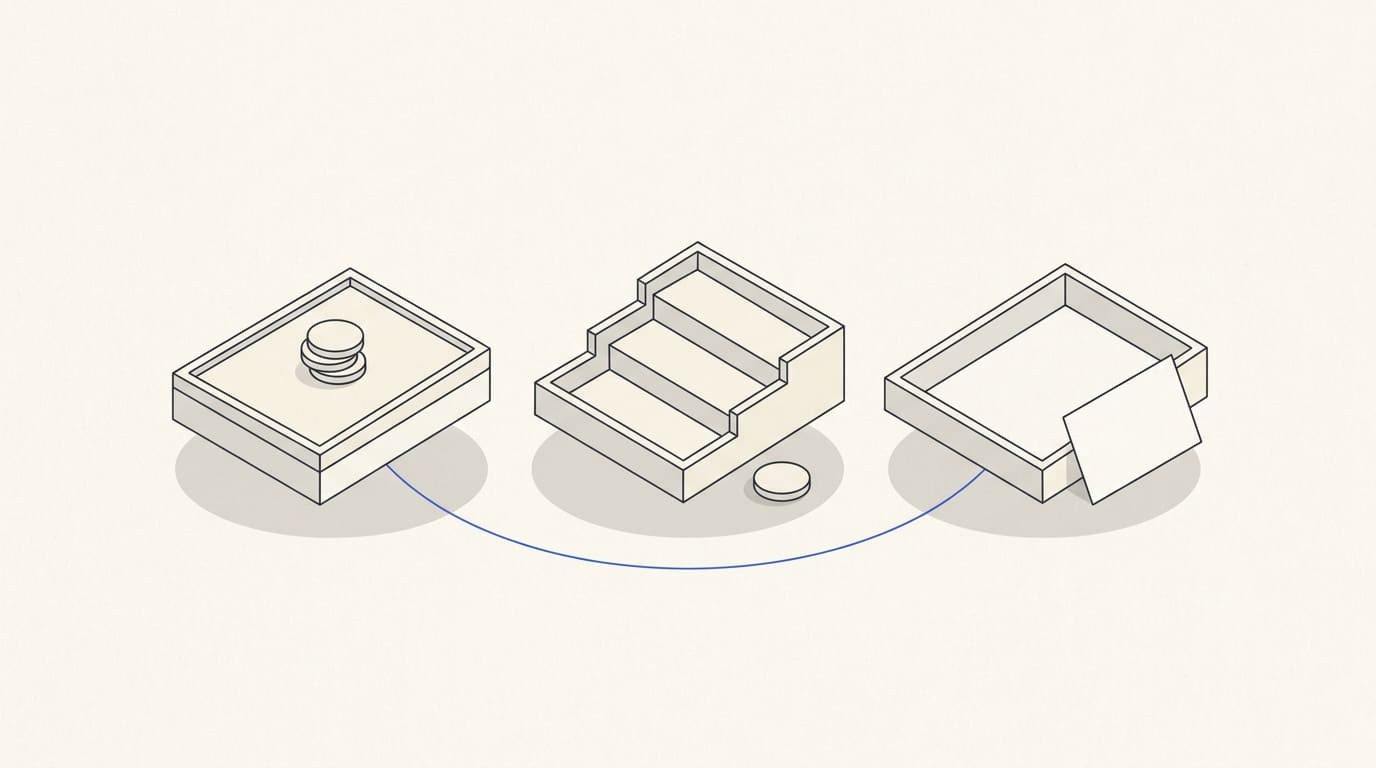
The right format depends on how predictable your service's scope and cost are. A fixed price may suit a standard package. A justified “from” price can work for a variable scope. A complex project calls for a custom quote with a clear explanation of how it is prepared.
Here is how to choose a format and what to put beside the price so that clients can make a meaningful comparison.
First, define what the client is buying
A service name does not describe its scope. “Website development”, “advertising management” and “design” can cover very different tasks.
Before choosing a pricing format, ask:
- Is the scope broadly the same from one client to another?
- Can you set clear limits in advance?
- Which conditions change the cost?
- Which expenses are charged separately?
- Is the work a one-off project or an ongoing service?
If a service has a standard core and optional tasks, describe them separately. This lets you present the basic offer and explain how additions are priced.
When a fixed price makes sense
A fixed price is useful when you can define the deliverables and boundaries before a client gets in touch.
Beside the amount, make the following clear:
- the quantity and format of the deliverables;
- the materials the client must supply;
- the number of included approval or revision rounds;
- the conditions for starting work;
- exclusions and the price of additions, or how they will be quoted.
For example, a consultation package can specify the meeting duration, the topic covered and the format of the recommendations. A design package can define the number of layouts and the files to be handed over.
Do not call an offer fixed-price if almost every ordinary order requires a mandatory extra charge. In that situation, reconsider the package scope or how you present the price.
A fixed price is useful when it comes with a fixed scope. Without that scope, visitors are comparing amounts that may refer to different services.
When a “from” price is appropriate
A “from” price works when the basic configuration is genuinely available and additional work depends on the client's requirements.
Explain two things:
- What the starting price actually includes.
- Which conditions increase the cost.
For a website, these might include additional unique pages, language versions, content preparation and custom integrations. For ongoing support, they might involve the agreed workload and the specialists required.
Avoid stopping at “the price depends on complexity”. Show what changes the amount of work.
If you offer recurring configurations, you can present several packages or a range with clear boundaries. Describe each option in a separate, short section.
When a custom quote is the better option
A custom estimate is justified when you cannot establish the main costs without discussing the task. For example, the state of an existing system, the required integrations or the volume of data to migrate may be unknown.
However, “contact us for pricing” says very little about what happens next.
Instead, explain:
- what information you need to prepare an estimate;
- what happens after the enquiry;
- whether preliminary research is required;
- what the client will receive: a range, an itemised estimate or a proposal with stages;
- when pricing becomes available within your actual process.
Promise a turnaround time for the proposal only if your team can meet it. If research is charged separately, explain this before it begins.
A website development brief helps collect the initial information. The same approach is useful for other project services: the task, scope, constraints and expected outcome form the basis of the estimate.
A hypothetical example of the three formats
Imagine a studio that creates presentations. The following prices and packages are fictional and only illustrate the formats. They are neither our agency's prices nor a market benchmark.
Fixed price: €600.
Designing ten slides using a completed text and supplied brand materials. The package includes two revision rounds and an editable file. Copywriting and extra slides are quoted separately.
From €600.
The basic version covers the same ten slides using ready-to-use materials. The price increases if the scope expands, complex graphics are required or additional language versions are needed. The final amount is agreed after reviewing the brief.
Custom quote.
A presentation for a new offer requires a structure, content and design. To estimate the work, the studio asks about the audience, the purpose of the presentation, available materials and the intended length. After clarifying these points, it prepares a proposal with stages.
In all three cases, the client understands what they are paying for. The difference is how much is known before the discussion begins.
Explain the full cost
State whether the amount applies to a single deliverable, an hour of work, a month of support or a project stage.
Explain recurring and third-party expenses separately. For digital services, these may include subscriptions, licences, hosting, email platforms or advertising spend. Clarify whether applicable taxes are included so that readers understand which total they are comparing.
For an international website, check the currency and conditions in every language version. If offers differ between markets, avoid suggesting that the same amount and package apply everywhere.
When prices change, update related content: the service page, proposal, FAQs and language versions. Conflicting amounts make decisions harder even when the scope is explained in detail.
For an example of how to explain a project's scope, see our proposal for a custom multi-page website. When comparing providers, consider the included work, exclusions and conditions of the particular order.
What to put beside the price
Use this short template:
- Format: a package, an hour, a month or a custom project.
- Price: a fixed amount, a “from” price, a range or the process for obtaining a quote.
- Included: the specific scope and deliverables.
- Required from the client: materials, access and approvals.
- Charged separately: additions and third-party services.
- Next step: choose a package, submit a brief or discuss requirements.
Keep important conditions next to the amount so that people can read them before sending an enquiry. The button should match the next step: “Discuss your project” is clearer for a custom estimate than “Buy”.
If you need to incorporate pricing into a coherent explanation of your offer, the article on structuring a service landing page can help. You can also discuss custom landing page development.
How to assess whether the new format helps
After changing how prices are shown, monitor both the number and quality of enquiries. Record whether people understand the scope, whether their requirements and budget fit, and how much clarification is needed before a proposal.
Fewer enquiries do not necessarily mean worse performance: some unsuitable requests may have disappeared. However, a drop in enquiries is not automatically beneficial either. Check what happens to suitable enquiries and subsequent orders.
Compare periods while accounting for visitor sources, advertising spend and changes to the offer. If there are few orders, the data may not support a confident conclusion.
Choose a pricing format based on how accurately you can describe the service. A standard scope allows a precise amount, a basic configuration supports a justified “from” price, and a complex project needs a clear process for preparing a custom quote.