
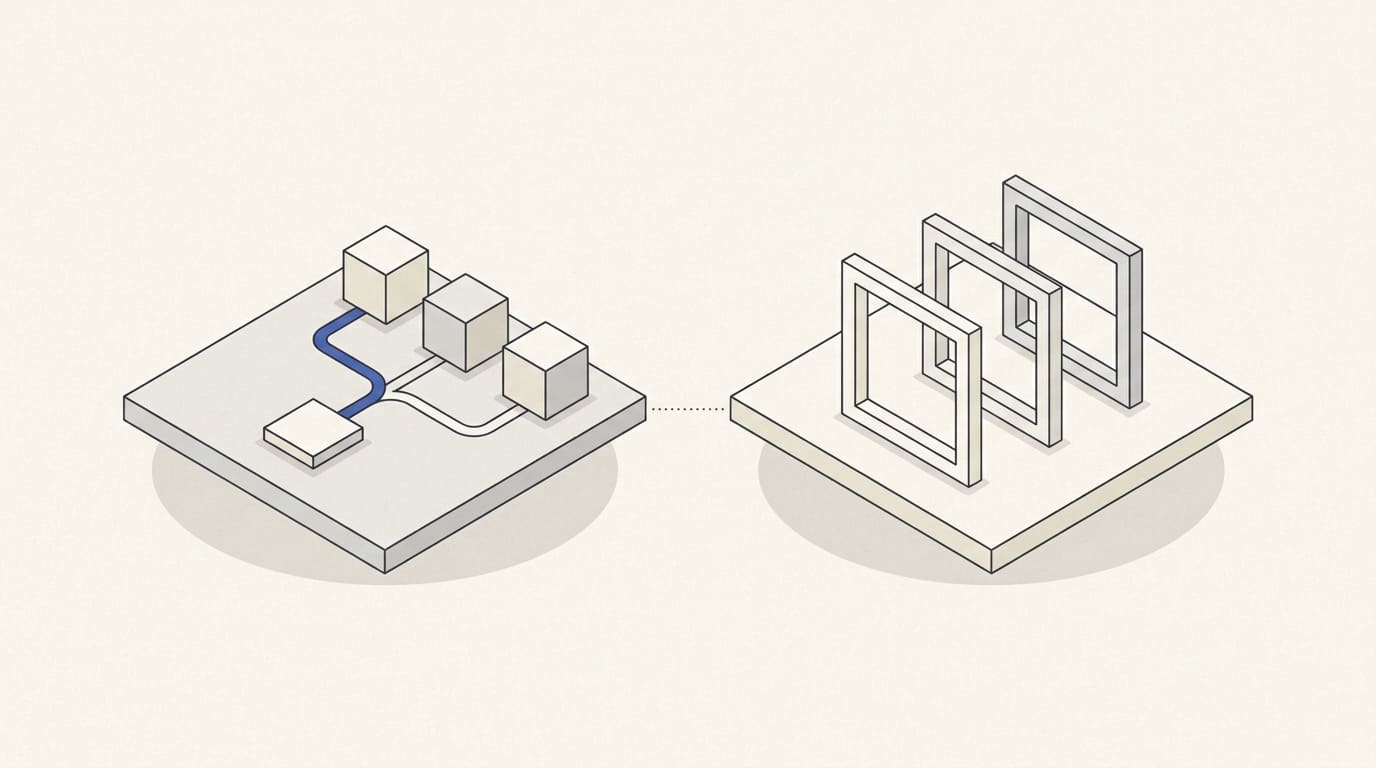
A company launches a new business line and faces a choice: keep the existing name, add a service label or create a separate brand? It is too early to decide this through logo design alone. First, understand how customers perceive the business lines and how the company will manage them.
Brand architecture describes the relationships between a company, its business lines and its products. It helps determine which names and visual features should be shared and which should differ.
Compare audiences and buying decisions
Check whether the same people buy from the different business lines, whether their needs are related and whether they expect the same service level. It also matters who makes the decision and where they encounter the offer.
If a customer often considers several services together, a shared brand may make the offer easier to understand. If audiences, price levels and reasons for trusting the business differ substantially, a shared identity may need additional explanation.
Use actual enquiries and interviews, rather than the team's opinion alone. To assess the market context, follow the process in the article on competitor analysis before launch.
Consider three ways to organise the brands
A shared brand with clearly defined business lines
The company uses one name and the main elements of its identity. Business lines differ through service names, website sections and the content of their materials.
Consider this option when the company's reputation matters to every offer and customers benefit from seeing the connection. A separate logo is not required for every service: first check whether clear navigation and descriptions are sufficient.
Distinct names endorsed by the company
A business line has its own name or visual characteristics, but its connection to the parent company is explicit. Decide in advance where and how that connection appears: in a descriptor, on the website or in documents.
This can distinguish the offers while keeping their origin clear. However, the new names and guidelines still need to be maintained; the option does not remove the need for separate materials and approvals.
Separate brands
Business lines receive independent names and visual identities. Consider this if a shared identity makes different offers harder to explain or the company plans to manage them independently.
Account for the workload: each brand needs content, visual materials, communication channels and responsible people. Different names alone do not create separate demand or remove every reputational connection.
Assess the work required after launch
Count the materials that each option will require you to maintain: website pages, advertisements, profiles, presentations, documents and language versions.
Clarify who will update prices, terms and examples of work. If the team lacks resources for separate communications, an independent brand may remain a name without a clear offer.
A shared brand can still require several pages. Different audiences may need separate sections and landing pages within the same system.
A hypothetical selection example
Imagine a company that sells furniture and installs it for the same customers. A shared brand with clear sections helps explain the complete journey from choosing furniture to installation.
Now suppose that the same company launches professional training for other organisations. The new business line has a different audience and buying process. It could explore a distinct name with an explicit connection to the company before creating a fully independent brand.
This is a hypothetical example. The final decision depends on the offer, recognition of the existing name and the team's capabilities, rather than simply having a second service.
Record the decision before developing the design
Prepare a short document:
- Which business lines are grouped together and how they differ.
- Who buys from each business line and how they choose.
- What role the parent company's reputation plays.
- Which names are used and where their relationship is visible.
- Which identity elements are shared and which may change.
- Who is responsible for materials and how new business lines enter the system.
You can then design section names, logos, templates and usage guidelines. To keep materials consistent, use the recommendations in the article on brand identity across websites, advertising and social media.
If the company's existing identity needs to change, plan the transition in advance. The article on rebranding helps account for current materials and points of contact.
The structure can be discussed as part of market research and strategy. The agreed system's visual identity is a separate task for logo and brand identity design.