
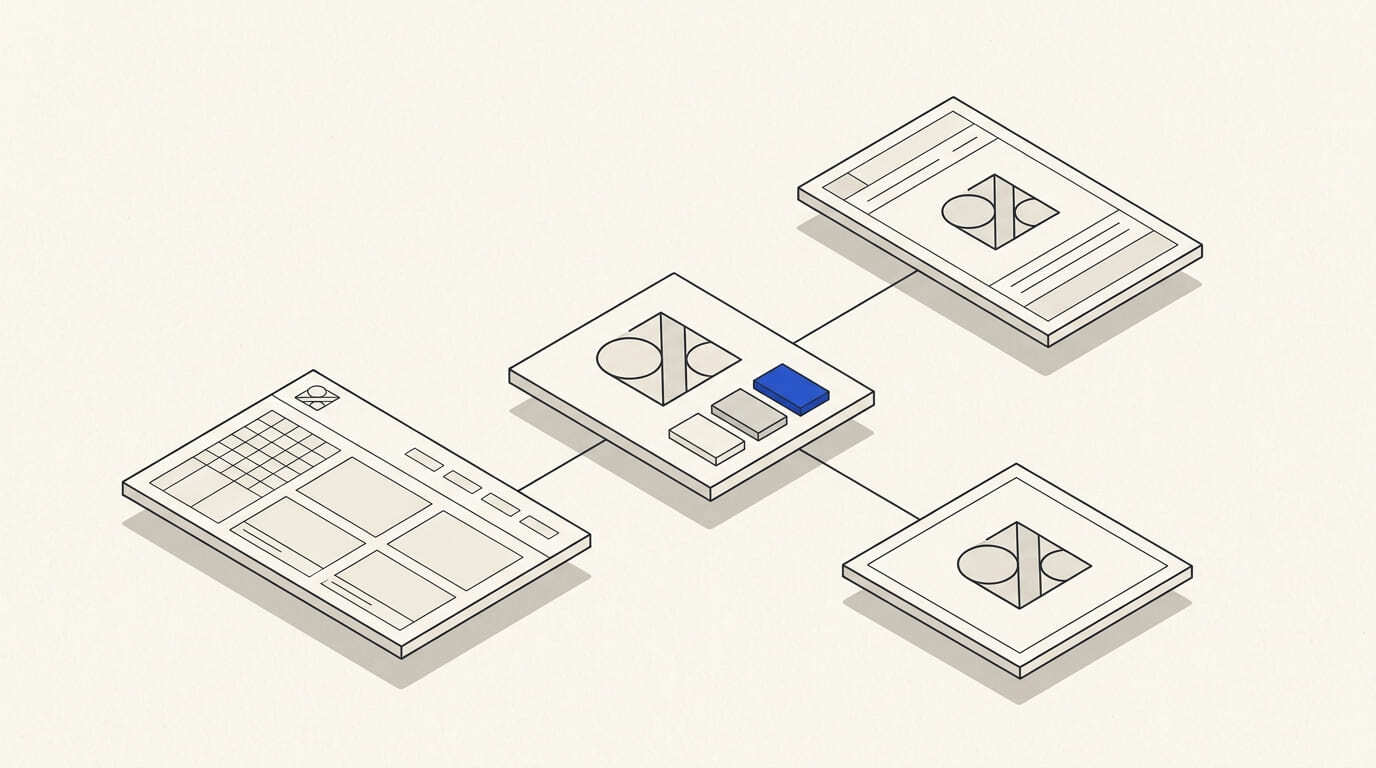
Once a brand identity is approved, different people start using it: the developer, advertising specialist, manager and social media designer. If each receives only a logo and a design example, the materials gradually diverge.
Keeping the identity consistent requires accessible guidelines, practical templates and a clear update process. The team needs to know which elements are fixed, what can be adapted and where to find the current version.
Define the fixed elements
Record the logo versions, typeface roles, palette, image style and main composition principles. Include the spelling of the name and permitted language versions.
A rule should help people make a decision. Instead of “use a clean design”, show acceptable logo placement, heading hierarchy and combinations of text and backgrounds.
You do not have to start with a large document. A small team may benefit more from a short guide with clear examples and ready-to-use files. The right set depends on the task; read more in the article on logos, brand identity and brand guidelines.
Adapt the identity to each channel
A website, an advertising banner and a social media post serve different purposes. On a website, people read and choose; in advertising, they need to notice an offer quickly; on social media, they may see a piece of content without the context of other posts.
Keep the brand's shared characteristics, but adapt text density, composition and element sizes to the format. Do not copy a large website section into a small banner without reworking the content.
Check how it actually appears: image cropping, readability on a phone and the space available for text. Important elements should remain visible when people see the finished format, rather than relying on the full layout shown in the editor.
Prepare templates for recurring tasks
Choose the materials the team produces regularly: a service card, advertisement, post cover, commercial proposal or presentation.
In each template, identify what can change: the heading, image, price and call to action. Specify fixed elements and text length limits separately.
Include an example with a long name or translation. A template that works only with a short label does not solve the team's real task.
Keep current files in one place
Store approved source files, exports and guidelines in a shared folder or library. Separate current materials from the archive and record the version and update date.
Appoint someone responsible for changes. Otherwise, a new shade or logo variant may appear in one channel while the others keep using the old one.
Give suppliers a link to the current set, rather than a random archive from an email exchange. The files needed for different uses are explained in the article on logo formats for websites, print and suppliers.
A hypothetical adaptation example
Imagine a company that uses a light background, dark text, one accent colour and a defined illustration style. Its website contains detailed service cards, while its advertisements use a short heading and one action.
The materials can have different compositions and still belong to the same brand through consistent typefaces, colours and imagery. This is a hypothetical example: identical placement of every element is not a requirement for consistency.
Checklist before releasing material
- The current logo is used without accidental stretching or changes to its proportions.
- Typefaces, colours and imagery follow the approved guidelines.
- The main message and action are clear at the size people will actually see.
- Text is not cut off, and translations preserve the meaning of the offer.
- Contacts, prices, terms and links match the current offer.
- The source file is saved in the shared location, and the next contributor can identify its version.
Review the website, advertisements and recent posts together. If differences recur, identify the cause: a missing rule, an awkward template or unavailable files. Improving the process is more useful than repeatedly making manual comments on every layout.
To build the system, consider brand identity and brand book design. Advertising format adaptations can be included in a brief for advertising banners and creatives, while changes to an existing website can be handled through website support and design.