
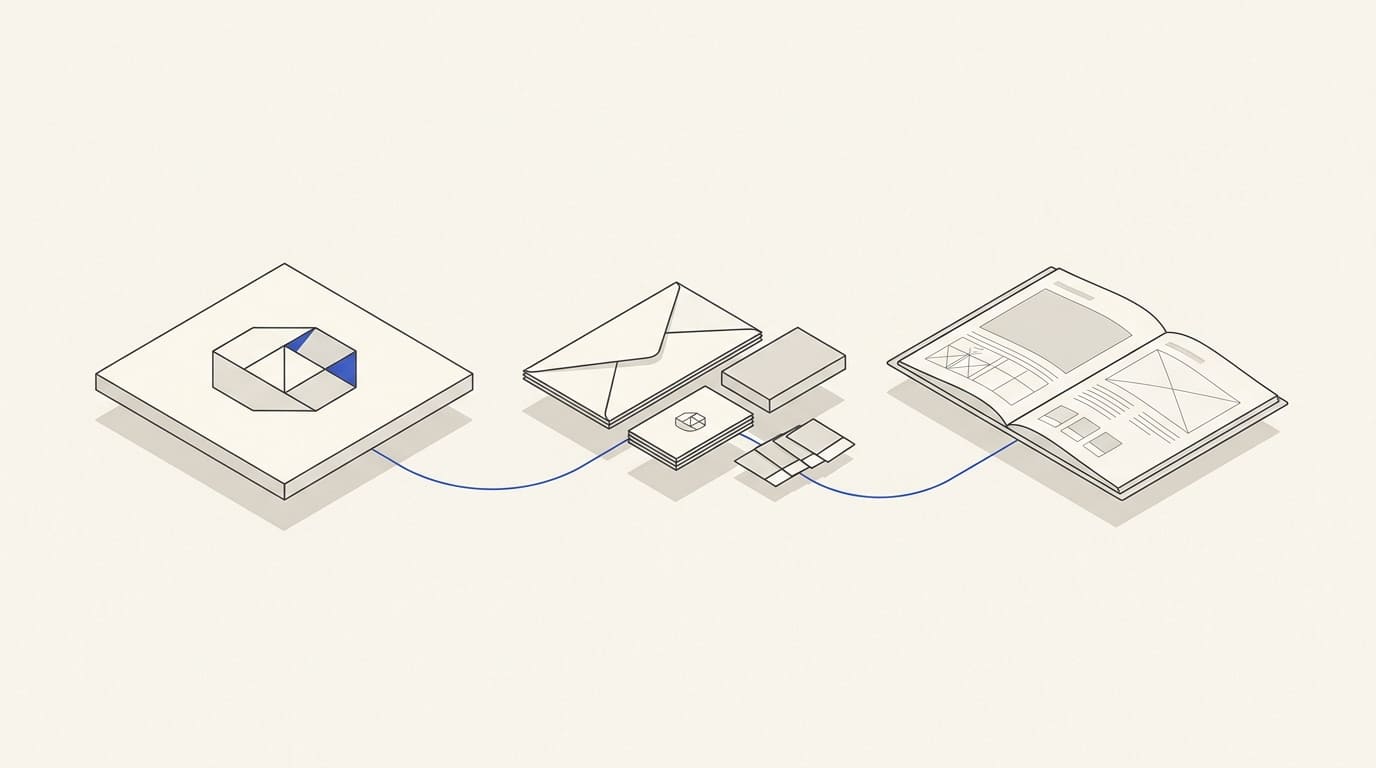
When launching a business, identify the materials you will need to communicate with customers. A website, commercial proposal, advertisements and packaging all have different design requirements.
Listing these needs helps you decide whether a logo with basic guidelines is sufficient or whether you already need a brand identity system with templates and a detailed guide for the team.
How do a logo, brand identity and brand guidelines differ?
A logo is a company's visual identifier: a symbol, a wordmark or a combination of both. Using it may require several layouts and versions for different backgrounds.
Brand identity is a design system. It includes coordinated colours, fonts, graphic elements and composition principles. This system connects your website, advertising, documents and other materials through a consistent visual identity.
Brand guidelines, sometimes called a brand book, document the brand's rules. Depending on the project, they may cover positioning, communication principles and visual guidelines, or focus primarily on design. Clarify the contents: the document's name alone does not define the scope of work.
The logo is part of the brand identity, and the guide explains how to apply the system. Assess the number of pages alongside the usefulness of the rules and examples.
Start with customer touchpoints
List where people will encounter the company during its first months of operation. Identify the material required for each channel.
This table helps you define the brief. If the company does not yet use packaging or outdoor advertising, you can schedule those designs for a later stage.
Which package should you choose at launch?
For a business with a clear offer and a small number of channels, a practical starting package includes:
- a primary logo and necessary additional versions;
- a palette with usage rules;
- fonts for headings and body text;
- a short guide with design examples;
- templates for immediate business needs;
- an organised set of final files.
Check in advance who will use this package. A template in professional design software may be inconvenient for an employee who creates proposals in a different editor. Agree on editable file formats with the people who will use them.
If the company works in several languages, check support for the required characters, the legibility of the name and how layouts handle different text lengths. A visually similar font with missing characters will cause localisation problems.
Detailed brand guidelines and a broader template system are particularly useful when several teams, branches or suppliers create materials. Document common situations so that contributors can make decisions without constant clarification.
Two hypothetical examples
The following examples illustrate how to choose materials. They do not describe real client projects.
A business services company. The first touchpoints are the website, correspondence and commercial proposals. An initial package might include a logo, palette, fonts, website design guidelines and a proposal template. Packaging and a large range of branded merchandise are not needed yet.
A brand with several products. Customers compare options on a shelf and in an online shop. Alongside a logo, the company needs a packaging design system: how products are distinguished, where required information appears and how product listings look. One demonstration box mockup is insufficient for the whole range.
In both cases, immediate needs determine the scope of work. Expanding the system is easier when the core rules are already documented.
What should a useful guide contain?
A guide should answer the questions your team will face in day-to-day work:
- Which logo should be used for a particular background and size?
- How much clear space should be left around it?
- Which colours should be used for the main design and accents?
- How should fonts be combined and text hierarchy organised?
- How should standard documents and posts be designed?
- Which changes are allowed and which break the system?
- Where are the current files and who is responsible for updates?
Show the rules using materials with real content: a long heading, several services, contact details and a table. This makes limitations easier to identify before widespread use.
How to avoid unnecessary expenses
First agree on the business objective and the materials' content, then their design. Changing the name or offer structure after design approval affects several files at once.
When choosing a supplier, check which templates are included, how many versions need adapting and who will prepare production files. Clarify font access and the ability to edit the materials separately.
We can help define the scope of your logo, brand identity and brand guidelines around your channels and goals. The list of work and the handover process are available in our commercial proposal.
A short brief before ordering
Complete six points:
- What you sell: the product or service to be presented.
- Who you sell to: the main customers and the circumstances of their choice.
- Where you will use the design: your website, documents, advertising, packaging and other actual channels.
- What you need for launch: a specific list of materials.
- Who will update them: employees, a designer or an external supplier.
- What will come later: new languages, products, channels or branches.
This brief helps you order a package that works from day one and supports future development. At launch, clear guidelines and materials for the team's actual needs are especially valuable.