
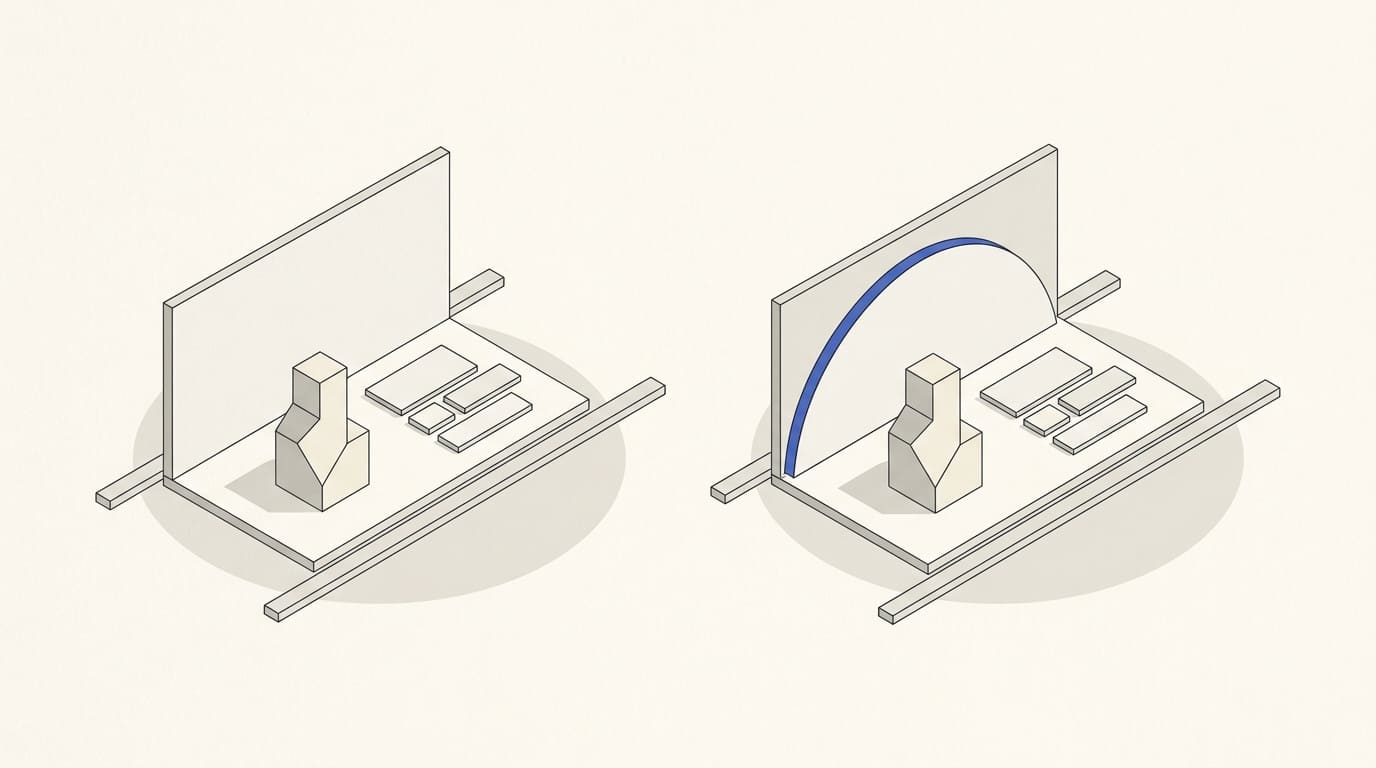
An advertising visual changes background, viewpoint, product colour and text placement together. A second version receives more enquiries, but the relevant change is unclear. The audience may have seen a different product or offer.
AI creative comparison starts with a hypothesis and fixed elements. Generation should create the intended variation without quietly changing other conditions.
Select one variable to evaluate
State the decision: does another environment, composition or use demonstration help? Give one comparison a primary variable.
Comparing entire concepts is valid too, but the conclusion concerns the concepts as a whole. Do not credit the background alone when product scale and text changed with it.
Hypotheses and evaluation are covered in advertising creative testing. Here, the additional task is ensuring comparable finished AI files.
Fix the product and offer
Prepare the approved model image, graphics and protected-detail list. Identical text descriptions do not guarantee identical generated products.
Agree price, terms, call to action and destination page. If the offer changes with the image, the visual factor is no longer the only difference.
Record format, text placement and permitted cropping. These relate to a consistent AI visual series, but the fixed-element list must be explicit for testing.
Build variants from a common foundation
Where possible, retain the product separately and change the selected environment or composition element. Use controlled layouts for typography and prices rather than regenerating lettering in every scene.
Illustrative example. A company compares a neutral studio setting with a product-use scene. Model, colour, size in frame, text and offer stay fixed. If the second variant also changes product colour, correct it or acknowledge that more factors are being compared.
A new scene may need corresponding light and shadow changes. If these cannot be separated, frame the hypothesis around the overall presentation type rather than one technical parameter.
Check finished-file comparability
Place variants together and compare the object, markings, text prominence, product area and detail quality. Record differences remaining after editing.
Check each placement adaptation separately. One format may preserve product scale while another changes it substantially through cropping. See advertising format adaptation.
If a meaningful uncontrolled difference remains, revise the file or the test question. Do not present different products as presentation variants.
Separate variant production from the advertising experiment
Comparable images do not ensure correct impression allocation. Audience, period, placements, budget and evaluation method also influence comparison.
Agree the test organisation and primary outcome beforehand. Showing several ads with different delivery volumes is not the same as randomly assigning audiences between variants.
Assess data volume, sales-cycle time and enquiry quality. If evidence is insufficient or conditions changed, state the limitation instead of confidently declaring a winner.
A variant preparation record
- Hypothesis and the decision to make.
- Variable factor or complete concept.
- Product model, offer and protected details.
- Shared foundation, formats and cropping rules.
- Actual differences after export.
- Advertising comparison plan and outcome criterion.
- Owners of product checks, design and evaluation.
When commissioning AI visual content, provide this record and verified inputs. Visual production and advertising test organisation need agreed work scopes; new variants alone do not guarantee improved results.