
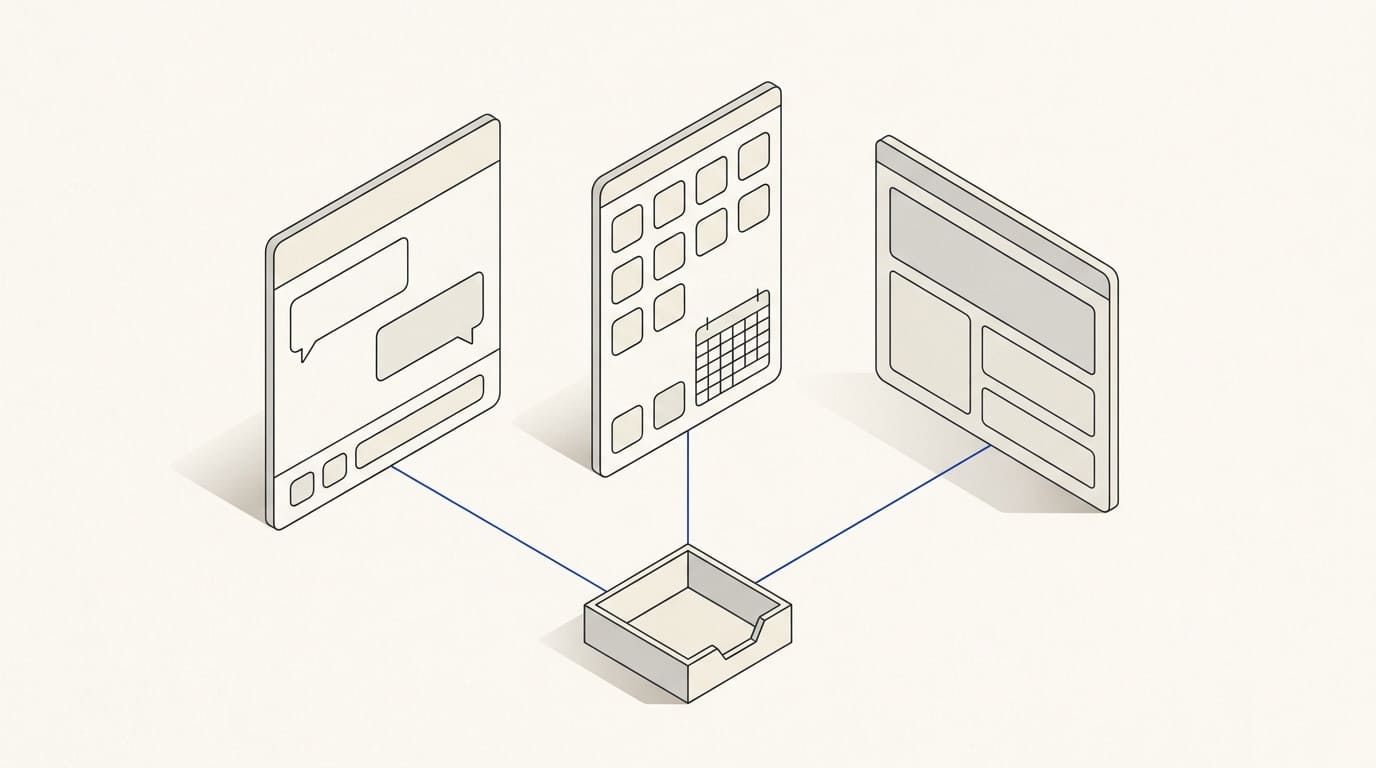
A customer needs to submit an enquiry, choose a time or make a purchase. For the business, the format matters less than a clear journey: the person finds the offer, completes an action and receives a result, while the team sees the enquiry in its system.
A Telegram bot suits a step-by-step conversation. A Mini App adds an application interface inside Telegram. A website presents your offer through a regular link and serves visitors from different channels. The choice depends on your audience, the complexity of the task and how enquiries are handled.
Start with the customer journey
Before choosing the technology, answer four questions:
- Where do people come from: search, advertising, referrals or a Telegram channel?
- Do they use Telegram, and are they willing to switch to it for the action?
- What do they need to choose: one service or a catalogue with options, dates and additional terms?
- Where does the team handle the result: in a CRM, booking system, store or manually?
People who do not yet know your company may need terms, work samples and answers to questions. Returning customers booking a familiar service may care more about repeating the action quickly. These situations do not necessarily need the same interface.
How the three options differ
A Mini App is a web interface that opens inside Telegram and can interact with a bot. It is more than a set of messages with buttons: its capabilities are described in the Telegram Mini Apps documentation.
When a bot is enough
A bot suits a task that fits into a short sequence: choose a service, answer a few questions and pass the enquiry to a member of staff.
For example, a quote request might ask for the project type, desired timeframe and contact method. After submission, the customer receives an acknowledgement and the manager receives a structured enquiry.
Allow people to return to the previous step, correct an answer and contact a person. Do not require a lengthy questionnaire if a few details are enough for the initial contact.
A standard bot cannot initiate a private conversation with an arbitrary user. For this workflow, the person must first message the bot; this restriction is stated in the introduction to Telegram Bots. Having a phone number in your CRM does not, on its own, let you message that customer through a bot.
When you need a Mini App
Consider a Mini App when the number of options makes a conversation inconvenient:
- customers compare products and change the contents of their cart;
- choose a specialist, service and time on a calendar;
- manage several bookings or orders;
- complete a form that is easier to see in full.
First define the screens and actions you need. A good-looking calendar will not solve the problem if availability data is outdated. A cart will not complete a sale unless stock, payment and order processing are coordinated.
Check what the first version really needs. A separate application may add unnecessary development work for a small enquiry form.
When to prioritise a website
A website is useful when visitors need to study the offer before contacting you and traffic comes from several sources. It can present separate service pages, terms, a portfolio and information that supports a decision.
If attracting visitors through search is part of your plan, provide accessible pages with meaningful service descriptions. A bot or Mini App alone does not replace this structure or guarantee organic traffic.
Provide a suitable contact option for people who do not use Telegram. You can discuss the website format through our website development service.
Check payments separately for sales
For physical goods and services, Telegram supports payments through third-party providers. Available options depend on the provider and market: see the Telegram Payments documentation.
Selling digital goods and services inside bots and Mini Apps requires Telegram Stars: see the digital payment rules. Determine the payment method before designing the order process, rather than after building the interface.
An illustrative choice
Suppose a company provides services by appointment. New customers arrive through search and advertising, while returning customers already communicate with the company on Telegram.
A reasonable arrangement to discuss:
- the website explains services, terms and how to get in touch;
- the bot helps customers book again quickly and collects requests;
- a Mini App is added if choosing a specialist and time is easier on one screen;
- all channels use one system for availability and bookings.
This is a hypothetical example, not a required architecture for every business. If customer numbers are small and appointments need a personal discussion, start with a request and confirmation by a manager.
How to decide
Describe one main workflow from entry to result. Compare the options by the number of steps, ease of selection, required integrations, launch cost and future changes.
For the first release, choose the simplest format that fully handles the task. Then track submitted enquiries, confirmed bookings or paid orders and identify where people stop.
A bot, Mini App and website can work together. Make sure they do not create conflicting versions of prices, schedules and statuses.
You can discuss a suitable workflow through our Telegram bot and Mini App development service. Integration options and the estimation process are described in our commercial proposal.