
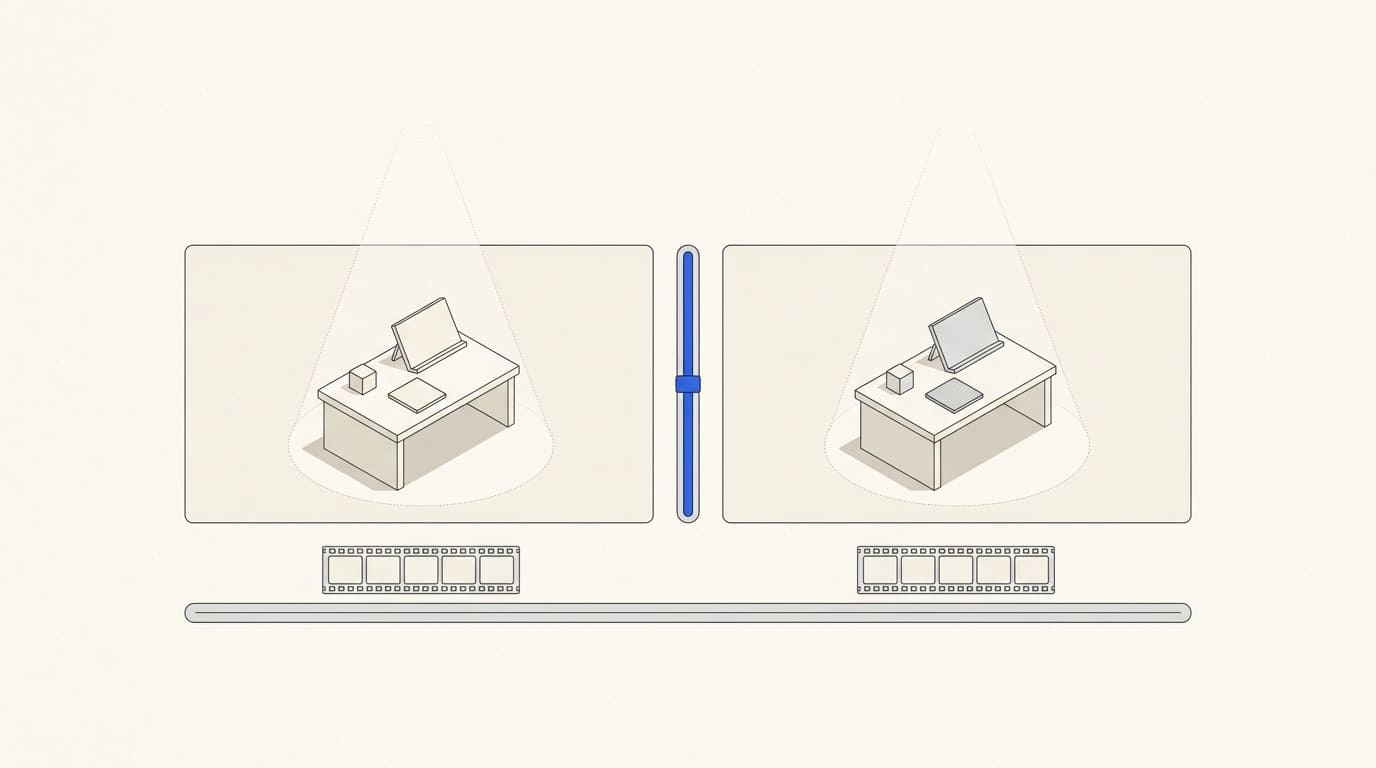
The object before work is filmed in shadow; afterwards it appears under bright light from a different angle. The change looks impressive, but viewers cannot separate service results from filming conditions.
Prepare before-and-after video as evidence of specific work. It needs comparable originals, clear context and editing that preserves the observation's meaning.
Define the change you can substantiate
Name what the team did: cleaned a surface, restored an element, revised page structure or configured a process. Do not combine different providers' work into one result without explanation.
Separate visible change from business consequences. A clearer interface can be shown on screen; increased sales need separate measurement and are not proven by appearance.
Agree the task, scope and project limitations. This foundation also supports website case studies, preventing the result becoming a universal promise.
Prepare comparable original footage
Where possible, retain camera position, distance, lighting and object state. Mark frame reference points to repeat the shot afterwards.
For digital services, use the same page, task and action sequence. Account for changed data, device or connection when comparing.
Illustrative example. A team films surface cleaning from a marked camera position under similar light. If the surface is wet afterwards, explain that state: wet material may look different from dry material. Do not hide this difference.
Preserve context and sequence
Identify the object, work dates and comparison scope. Do not combine one project's “before” with another's “after” as one story.
If the process is sped up or stages shortened, indicate that where viewers could misunderstand duration. Short video need not show everything, but important conditions should survive an impressive transition.
If no before footage exists, do not fabricate it retrospectively as real footage. Explain the task through a diagram or separate demonstration with its status clear.
Check image processing and sound
Agree colour grading, crops and stabilisation. Avoid processing that amplifies an initial defect or conceals a remaining one.
Captions and voice should describe the result shown. An employee or customer quote cut to a different meaning can distort the explanation despite authentic footage.
For a testimonial, preserve context and confirmed facts. Questions are covered in customer video testimonials.
Review facts and intended placement
A subject specialist checks the delivered work; the publication owner checks readability, sound, links and material usage terms.
For an advertising version, separately check platform rules, service category and claim suitability. Posting in a profile does not establish advertising suitability.
Watch the complete final export and watch without sound. Use the Reels editing acceptance checklist. Record comments with timecodes and required corrections.
A credible comparison checklist
- One confirmed object and clear work scope are shown.
- Originals have known provenance and dates.
- Viewpoint, lighting and state are comparable or differences explained.
- Editing does not substitute the object, duration or process meaning.
- Processing does not create a result absent in reality.
- Captions, voice and testimonial match substantiated change.
- Materials are cleared and the final file checked for placement.
Discuss production through the Reels production offer. Supply originals and work details before filming: credible comparison depends on what was captured as well as editing.