
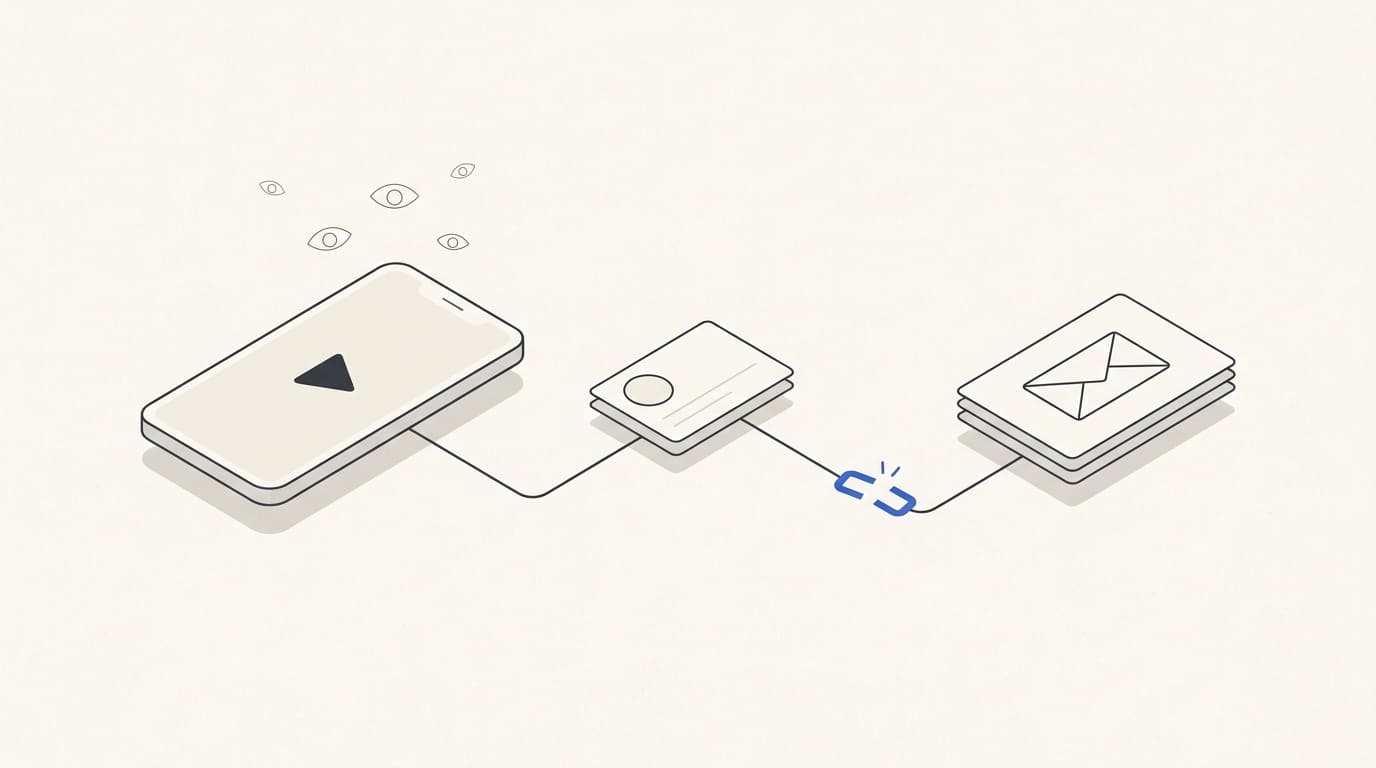
A video has been watched thousands of times, but enquiries are scarce. That does not mean Reels are useless for your business. Watching, becoming interested in an offer and being ready to buy are different actions. The weak point may be the topic, the audience, your profile, your website or the way you handle enquiries.
To find the cause, follow the viewer's journey from the video to an order. Changing everything at once makes it difficult to identify which adjustment affected the result.
First, define the purpose of the video
A Reel can introduce your brand, explain a service, help people compare options or invite an enquiry. Each purpose needs different measures of success.
For a product demonstration, consider whether viewers understand its features. For a video explaining a service package, look at visits to the service details and relevant questions. For a booking invitation, look at meaningful enquiries and what happens to them next.
If a video simply entertains while the service requires explanation and trust, do not expect immediate orders from every view. The connection to your business should still be clear: viewers need to see what you offer and who it helps.
Check who the topic attracts
A popular topic can attract people who are not a good fit for your offer. Review the questions in comments and messages, who follows the account and which markets enquiries come from.
Check the match between:
- the language of the video and the language in which you provide the service;
- the problem shown and the service you actually deliver;
- the market targeted and your ability to fulfil an order;
- price expectations and the way you work;
- interest in the story and interest in the product.
For example, a joke about renovation may attract a broad audience, while a video explaining how to choose a material for a specific job may attract people already comparing solutions. These topics serve different purposes, so views alone are not enough to assess them.
Check whether the story leads clearly to your offer
After watching, a viewer should understand:
- what the company does;
- which problem the product or service solves;
- where to find more information;
- what action they can take now.
Avoid overloading a video with several calls to action. Choose one next step suited to the topic: review what the service includes, open a category, ask about an option or send an enquiry.
The call to action should match the viewer's readiness. If people first need to compare specifications and terms, linking to a detailed description may be more useful than immediately asking them to order.
Check your profile and destination page
Open your profile and website on a phone as a new visitor would. Check the description, links, visibility of the offer and contact options.
The destination page should match the product, service and terms shown in the video. Someone interested in a specific model should not have to search the entire catalogue to find it again.
Check the form, buttons, page loading and enquiry submission. Make sure the enquiry actually reaches the person responsible. If the problem is at this stage, a website audit can help identify technical issues and obstacles visitors face.
Separate a lack of enquiries from a lack of tracking
Some people may get in touch later, through another channel or after several interactions with the company. Collect the available information about visits, enquiries and sales, and record the source in your CRM or a spreadsheet.
Use tagged links wherever a visit can be connected to a particular post or series. If your profile has one shared link, do not attribute every visit to a single Reel. Ask customers how they heard about you, but remember that their answers can also be incomplete.
Keep views, accounts reached and website visits separate. Record each metric's definition, reporting period and data source. Track organic distribution and paid promotion separately.
A table for locating the weak point
These are areas to investigate, not ready-made diagnoses. The same observation can have several causes.
A hypothetical comparison of two series
Suppose a company compares two series over the same period, without paid promotion. The source of the listed enquiries is confirmed in its records; some other enquiries still have no identified source.
Series A attracted more attention. Series B generated more suitable enquiries in this hypothetical example. That is a reason to examine the topics and viewers' subsequent actions, but the small sample does not establish a universal winner.
Views cannot automatically be treated as a count of potential buyers. If your sales cycle is long, also track what happens to enquiries after the first contact.
Plan the next check
- Choose a problem supported by the available data.
- Write down a hypothesis: who should be interested and what should become clearer.
- Change a specific element, such as the topic, explanation, next step or destination page.
- Record which metric you will assess and over what period.
- Review the result alongside enquiry quality and feedback from the sales team.
For example: “In the video about pricing, we will show the scope of work so that more enquiries describe a suitable task.” This is a testable hypothesis, unlike the vague aim of making a video “sell better”.
If you need help with the content and production of the next series, explore our Reels production service. The stages and terms are described in the commercial offer.
The purpose of the check is to find the point where the offer becomes unclear or the viewer cannot take the next step. Your next series and website improvements can then address a specific problem.