
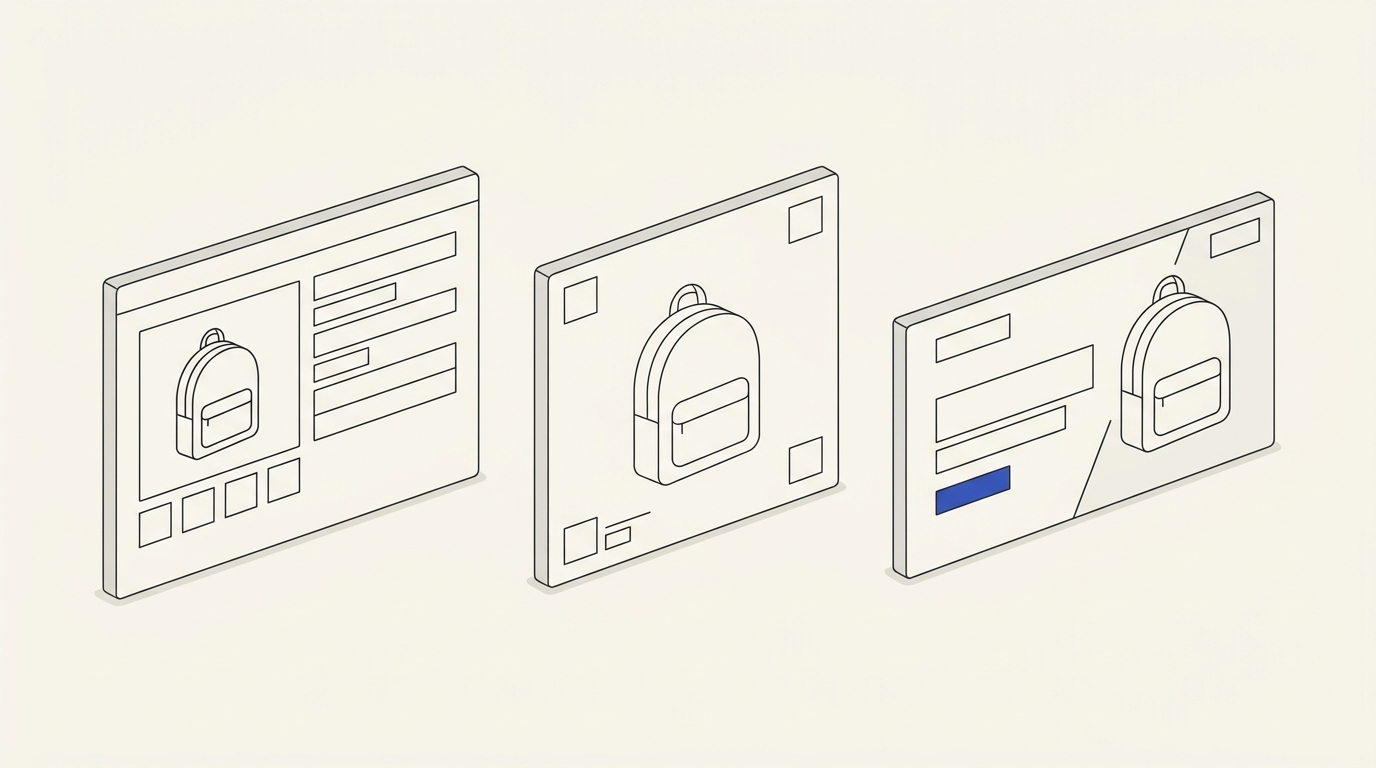
A marketer commissions three different assets for one product: photos for the website, square marketplace pictures and atmospheric advertising banners. When each designer works without a shared specification, the case colour, component count and kit contents can diverge. Customers see contradictory information and the brand pays for rework. Use a single product reference and a channel-specific output matrix.
One verified product, multiple compositions
Approve the SKU, current variant, colour, dimensions, packaging and all included items. A catalogue prioritises accurate shape and description; a marketplace requires compliance with its own policies; an advertisement emphasises attention and use context. Different scenes are acceptable, different product facts are not. Check scale relative to surrounding objects and any invented accessories.
AI mockup and visual content creation can help develop settings and compositions, but the product's accuracy must come from technical records, not from generated images. When essential details are hard to reconstruct, retaining a real product photograph is safer. Source-specific checks of kit composition and cost per accepted image are discussed in separate RU articles; no identical EN URLs are presumed.
Plan an output matrix before production
List each format, dimensions, aspect ratio, background policy, safe area, text restrictions, file weight and intended role. Do not apply rules of one marketplace automatically to another; category and platform requirements change. Identify transparent-background needs, where interior scenes are allowed, how variants are labelled and which placements need a separate mobile crop.
Organise sources and versions
Use clear names such as SKU-090_site_front_v01, SKU-090_market_detail_v01 and SKU-090_ad_scene_v01, and maintain approval history. A version number alone does not guarantee that the asset depicts the current product. When the product specification changes, recheck all channels. Keep one controlled archive of reference photos, approved exports and reuse rules.
Hypothetical TASK-090: a six-file kit
Fictional SKU-090 is a desk lamp in one colour with a power adaptor included. Two assets are needed for the website (overview and detail), two for a marketplace (main shot and box contents), and two for advertising (room setting and close-up)—six files in all.
- Approve a product record showing one lamp, one power adaptor, the correct case colour and acceptable angles.
- Prepare site overview and detail images; separately verify current marketplace main-image and content requirements.
- Produce atmospheric ad scenes without inventing additional accessories as part of the kit.
- Export all six files, compare body shape and colour, and record their intended uses.
- Test actual pages for crop and legibility, and verify that the ad link opens the same SKU-090 version.
Positive test: all six assets depict the same approved product; only composition and format vary. Negative test: the ad adds a cable not included in the catalogue or the marketplace shows a different case colour. Reject the affected creative.
Keep one source record for every channel
Prepare the SKU, variant, colour, kit, source photography and permitted environment changes before generating anything. The published guide to preparing products for AI visualisation explains how to gather original photos and labels. This does not replace up-to-date marketplace policies, which must be checked separately for size, text, provenance and placement.
What to commission and accept
Send technical photographs, SKU list, variant definitions, platform specifications, ad dimensions and proposed scenes. Deliverables should include a file matrix, an agreed count (six here), source files, checklist and approved revisions. Through the published advertising creative offer and agency contacts, scope the project based on complexity, variants, channels and revision cycles. Do not confuse buying creative assets with guarantees of marketplace approval or ad performance.
An output matrix based on each image's purpose
For fictional SKU-90 desk lamp, the site needs specific angles and facts, the marketplace demands compliance with its actual category rules, and the advertising banner needs room for a truthful headline. A beautiful master render is not automatically suitable for every placement.
- Website: main image, connection angle, dimension diagram and a separate kit photograph; do not invent unavailable specifications.
- Marketplace: correct background, crop and contents under the chosen platform's current policy and market.
- Ads: a layout for the selected aspect ratio with a substantiated claim and visibility of material product limitations.
Cross-channel acceptance TASK-090
Log six fictional outputs: WEB-01/02, MARKET-01/02 and ADS-01/02. Each entry carries the source SKU, product revision, destination, file size, approval status and reference. If the supplier changes the case colour, first update the central product record and then recheck all six files, including campaigns already prepared. Positive test: the website, marketplace and ads depict one consistent version with the correct kit. Negative test: the ad uses a new case while the marketplace shows an obsolete configuration.
Separate creative approval from product-fact verification. Supply brand rules, licensed source materials, product data and placement specifications. The published creative offer covers graphic production and adaptation, but specific marketplace formats and factual validation must be agreed separately.
For advertisements across different placements, digital and offline creative design addresses format adaptation; each derivative still needs the same approved product data.
The banner design offer describes individual visual deliverables, but a six-asset coordinated product set and marketplace checks require a clearly agreed separate scope.